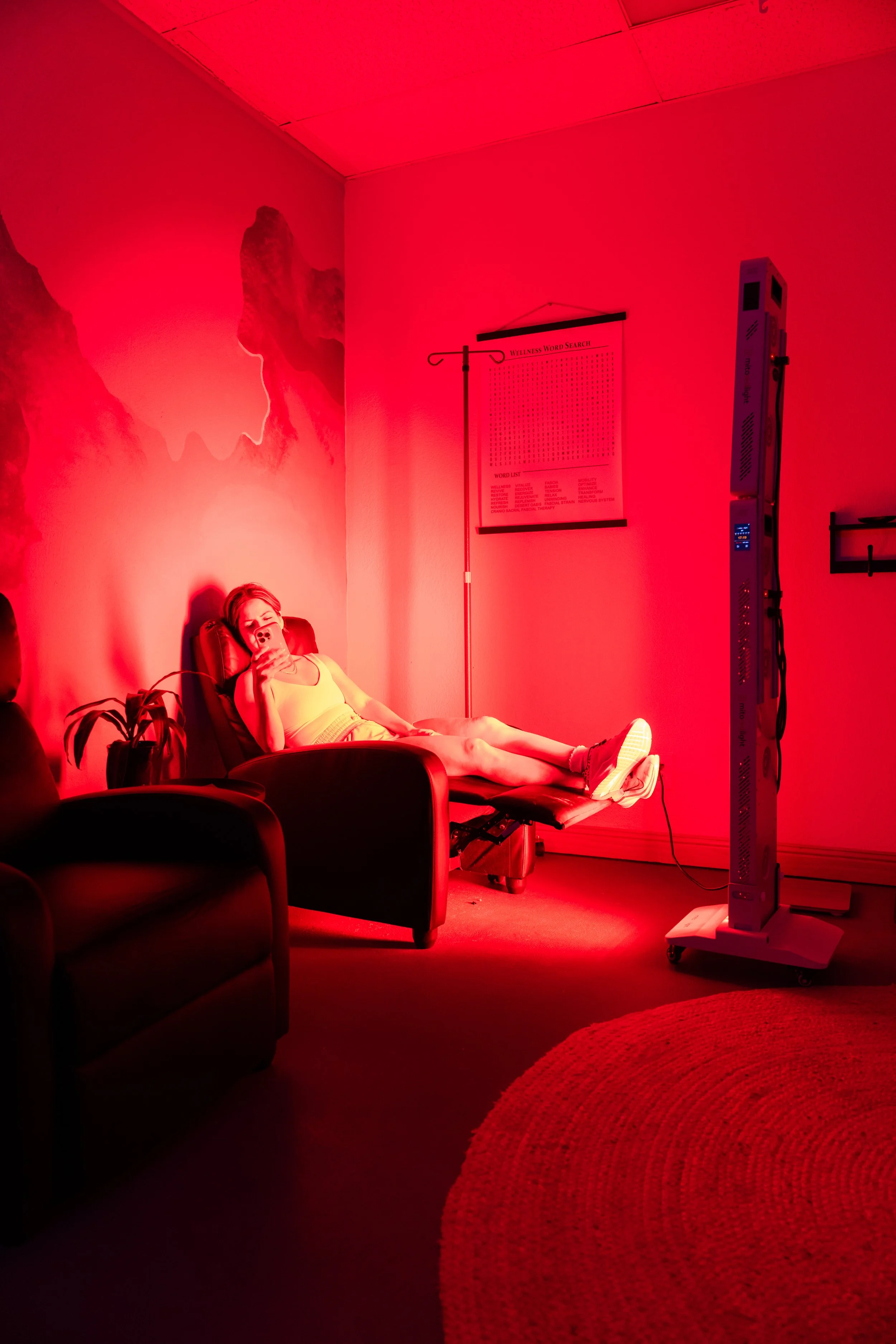
Red Light and Near Infrared Therapy
Red light therapy (RLT), also known as photobiomodulation (PBM) and Near Infrared (NIR) has been shown to enhance mitochondrial function in cells. Just like plants use sunlight to heal and grow, our body is able to harness specific wavelengths of light and turn them into cellular energy. This, in turn, stimulates your body’s natural healing processes.
RLT has been shown to increase mitochondrial function and collagen production. Studies reveal that red light heals age-related macular degeneration of the eyes and also show a wide range of hormone benefits in both female and men. Making energy more efficient throughout your body improves physical function, speeds the healing process, and lowers inflammation & pain, as demonstrated in peer-reviewed studies.(1)
(1)Hamblin M. “Mechanisms and Mitochondrial Redox Signaling in Photobiomodulation” Photochemistry and Photobiology. 2018, 94:199-212. 2017 October 31. doi: 10.1111/php.12864
Benefits of red light & near infrared therapy can include:
Increased energy
Heals age-related macular degeneration of the eyes
Speeds healing & recovery
Improved sleep
Lowers inflammation & pain
Red light therapy, or photobiomodulation, is a noninvasive treatment using red and near-infrared light to stimulate cellular activity. By penetrating the skin, it promotes ATP and collagen production, supporting cell function, tissue repair, and reduced inflammation.
Clinically observed benefits include improved skin quality, accelerated wound healing, decreased pain and inflammation, enhanced circulation, and elevated mood and energy. Studies report effectiveness for conditions such as knee osteoarthritis, acne, psoriasis, and signs of skin aging, with reductions in pain and improvements in function and complexion.
Overall, red light therapy is a well-tolerated, research-supported modality that can complement strategies for skin health, pain management, and general wellbeing.